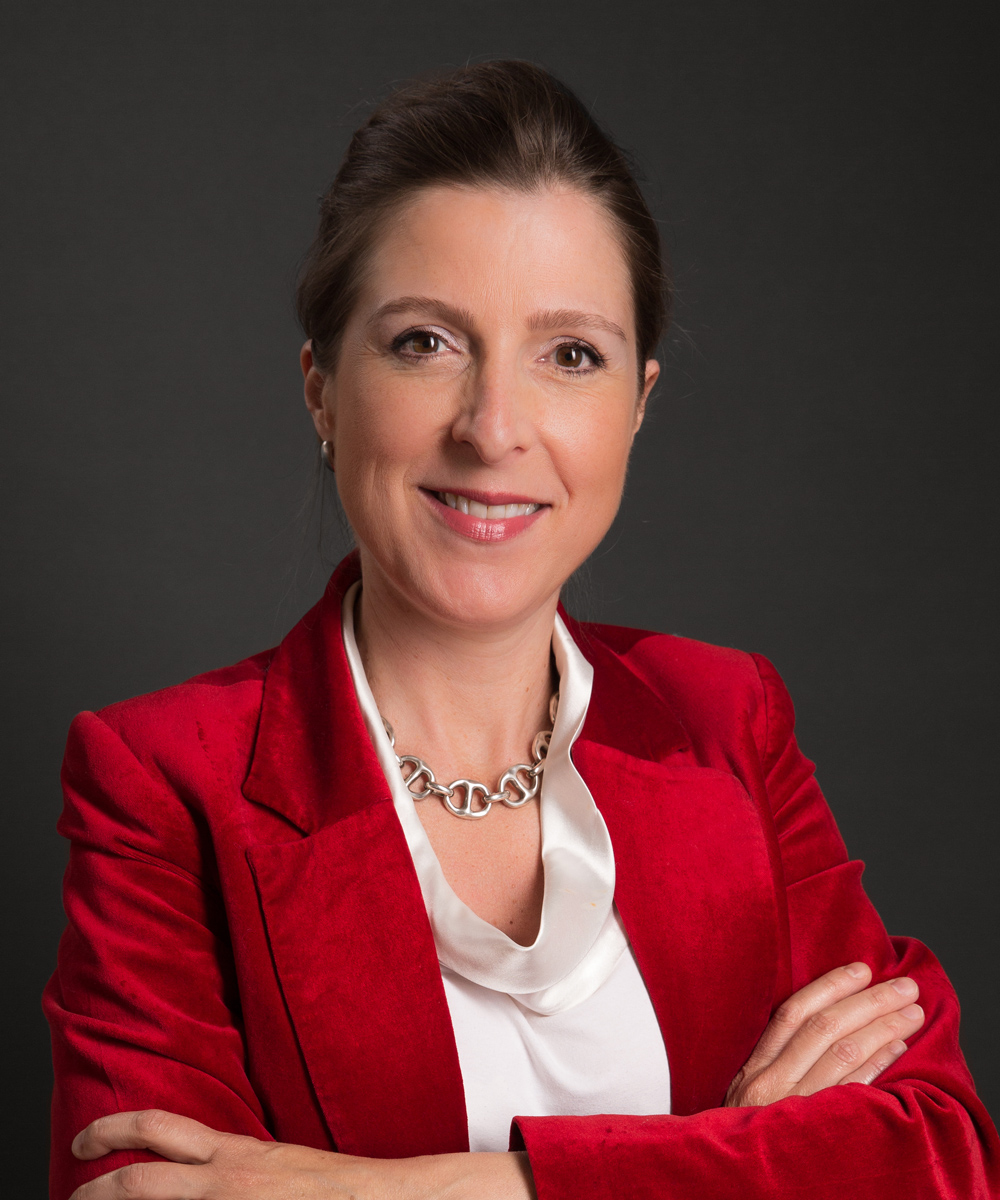
“A career is often a succession of encounters, especially with mentors.”
Maude Lebois, Founding Partner at Gaillard Banifatemi Shelbaya Disputes.
First of all, where does that little accent come from?
I’m Belgian. I grew up in Liège and initially practiced as a lawyer in Brussels.
Is there a family connection behind your choice of profession?
No, not at all. My parents were teachers.
How does a young girl – or even a young woman – decide, “that’s the job I want to do”?
It’s not a profession I wanted to pursue from childhood. I wanted to become a forensic pathologist. And in the end, I actually find there are connections. Even today, forensic medicine and technical reports in general interest me a great deal. At the same time, I was passionate about classical music and a violinist at the Royal Conservatory of Liège. At eighteen, however, I decided to begin studying law because I couldn’t imagine having a career as a soloist.
Why wouldn’t you have become a soloist?
Because there were many called and few chosen, and I didn’t have enough ability to let go (le “lâcher-prise”) to express emotions in order to pursue an artistic career — I am more of a control freak.
How old were you?
Eighteen. In law school, I met a first mentor who was the dean of the law faculty at the time. Actually, I think my life has been shaped by meeting mentors – who fascinated me and shaped my career. Beyond that, the law immediately appealed to me for its rigour and its purpose. And I found my musical training had been extremely useful.
For discipline?
For discipline, of course, work ethic, concentration.
You mentioned earlier there were links between what you do today and forensic medicine. What are they?
I specialize in construction and infrastructure projects, and in construction you are always dealing with precise, multiple factual elements and cross-checking them. Everything must be studied in the smallest detail; this concern for factual investigation, this need to understand every element in order to recreate a scenario is essential. This investigation also relies on interaction with technicians, of course. Technical experts won’t discover the scenario on their own or determine the truth, but they feed us with technical elements. As for the link with music, both come from passion and relentless work to master the smallest detail. Just as a musician wouldn’t say they “work,” being a lawyer has never felt like “work” to me either. That is undoubtedly a common trait among all our team members, by the way.
Is this mentor you were telling us about the one who led you to specialize in arbitration?
Partly yes, and after my LL.M. at Harvard Law School, I sent a letter to Prof. Emmanuel Gaillard in Paris, upon the recommendation of my Harvard professor.
How old were you at that time?
Twenty-seven.
And so, you went to Paris to see Emmanuel Gaillard?
Yes, and that’s when it started. I met a second mentor.
I’d like to know what impression you had when you arrived in 2004? Do you have memories of that?
I was very enthusiastic.
Were there many men?
I never questioned it. Perhaps the thing that surprised me the most is that there was no real hierarchy. Even though I was just starting in this new firm, I was able to work directly with Emmanuel Gaillard and with Philippe Pinsolle from the beginning.
And otherwise?
I remember that we had this concern to understand and get to know each client, to truly meet them. We weren’t in a “service provider” relationship; we weren’t selling legal services. We were trusted advisors, capable of stepping back from the issues to be analyzed. The importance of building this relationship of trust with the client is something Emmanuel instilled in me.
What do you mean by that?
It means that a lawyer – in his view – is not someone who provides a service, but someone you can rely on for the broader development of your business. It may seem surprising because our specialization is arbitration – you might think, “people come for an arbitration case” – but in reality, for many clients, it’s more about a long-term relationship of trust, with involvement in strategic decision-making that goes beyond the scope of a single case.
You mentioned that people often contrast “trusted advisors” and “service providers.” Can we elaborate?
There’s a book called The Trusted Advisor – it’s actually on my bedside table at the moment – that explains the difference between a “commodity lawyer,” meaning someone who gives a technical opinion, and lawyers who are very close to the client, truly care about their success, and build a long-term relationship. It’s an old book, but I reread it quite regularly so I don’t forget it! And to come back to Emmanuel, he was truly adored by his clients, and that’s where the trusted advisor aspect makes perfect sense! Some clients had been his for twenty or thirty years and consulted him on multiple issues. In my view, this way of working is also part of our DNA at Gaillard Banifatemi Shelbaya Disputes.
Yet you have a very demanding job. Don’t you feel more torn than your male colleagues?
Of course, some young lawyers aiming for arbitration ask me, sometimes when applying here, “can you have a family at the same time?” What I answer is that working the way we do is living a passion; it’s a bit like any artist or professional athlete: you bring your whole family on board in that adventure, actually. It almost has to be – I wouldn’t know how to say it otherwise – a family project! I don’t think you should say, “I have my private life and my professional life.” People often feel certain that they must absolutely separate the two. I think the opposite: given the hours spent, the investment, the irregular schedules, you shouldn’t say, “Ah, I switch off, I go home and I don’t talk about what I do,” but on the contrary, manage to get your children and your husband excited about what you do, so they tell you: “Mom, you need to go! You have to win this case!”
You need unconditional support at home for that, then?
Yes, that has been my strength; it’s the message I try to convey to younger colleagues.
Today, how would you define the core of your activity?
An important part of my work is as an arbitrator, the other part as counsel. I am also a co-founder and co-president of the Society of Construction Law France, which promotes the development of construction law and the understanding of all construction professions, particularly in civil law countries.
Could you tell me more about the kinds of cases you handle?
What’s interesting is that generally these are projects that are still ongoing. I don’t arrive with a frozen situation. Usually, I come in with a developing case, a project where there are delays, defects, non-compliance issues. When entering this project microcosm, you’re usually the only lawyer, alongside the project’s in-house counsel; you’re mostly surrounded by engineers and project managers. I love that very pragmatic side where you must find immediate solutions because they are projects where every day of delay matters, while also carrying out extremely meticulous investigative work to build an arbitration case later.
Do you often get involved upstream?
Yes, I am often brought in well before the arbitration. I am also involved at the drafting stage of many contracts. And many projects will never go to dispute.
Do you feel there are still things you have to learn?
Yes, many. On all the technical aspects, of course, but also on legal issues and on arbitration strategy. Each case is truly unique.
Quite a project!
Interview by Lisa Vignoli